Managing Medication safely in home care settings
💊 Managing Medication Safely in Home Care Settings
Medication management is one of the most important aspects of home care. For many clients, multiple prescriptions are part of daily life, and ensuring they are taken correctly is essential for safety, wellbeing, and independence. At Humble Acts of Service, we see medication management not just as a task, but as a partnership between nurses, carers, clients, and families.
🩺 Why Safe Medication Management Matters
Prevents errors such as missed doses, double dosing, or incorrect administration.
Supports health outcomes by ensuring medications are taken as prescribed.
Reduces hospital admissions linked to medication mismanagement.
Promotes independence by empowering clients to understand and manage their own medications where possible.
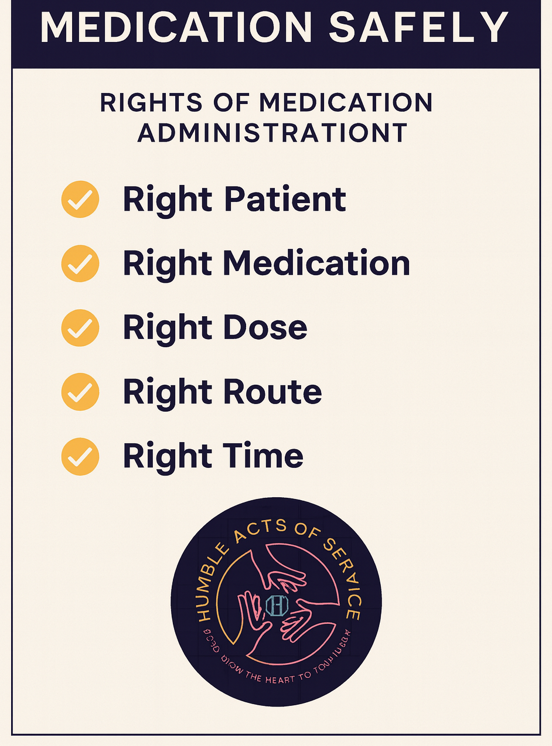
Key Principles of Safe Medication Management
1. Accurate Documentation
Every medication must be clearly recorded in care plans and support notes.
Nurses ensure records are audit‑ready and aligned with NDIS and aged care standards.
2. Clear Communication
Nurses educate clients and families about what each medication is for, when to take it, and possible side effects.
Support workers are guided with checklist tools to track administration and report concerns.
3. Safe Storage
Medications should be stored securely, away from children or pets, and at the correct temperature.
Nurses assess the home environment and provide practical solutions for safe storage.
4. Monitoring and Review
Regular reviews ensure medications remain appropriate as health needs change.
Nurses monitor for side effects, interactions, and signs of deterioration.
5. Empowerment and Education
Clients are encouraged to take an active role in their medication routines.
Simple tools like pill organisers, visual charts, and reminder systems support independence.
Humble Acts of Service Approach
We integrate goal tracking and checklist systems into medication management:
12‑Month Goal Reports: Medication safety is reviewed as part of our annual goal reaching reports, ensuring progress is measured and documented.
Checklist Tracking: Support notes include practical checklists so staff can track daily medication administration alongside personal goals.
Audit‑Ready Documentation: Our systems are designed to meet compliance standards while remaining simple and accessible for staff and families.
Final Reflection
Safe medication management in home care is about more than compliance—it’s about trust, dignity, and empowerment. By combining clinical expertise with practical tools, nurses ensure that clients receive the right medication, at the right time, in the right way.
✨ “Managing medication safely means protecting health while honouring independence. It’s about creating systems that are both compassionate and reliable.” — Nurse Ktoday
